Most people never think about their air conditioner until it misbehaves. You expect the house to cool down, the thermostat to hit the number you picked, and the power bill to stay somewhere between annoying and manageable. Then summer hits hard, and suddenly the AC runs nonstop, some rooms never really cool off, the air feels sticky, or you find water where it certainly does not belong.
This is exactly why we offer a real A/C tune‑up (ACTU) in New Orleans – not a five‑minute “hose-and-go” visit, but a checklist‑driven service that truly lowers system pressure, protects the equipment, and reduces the chances of mid‑summer breakdowns. We focus first on the parts that quietly cause most of the pain: a dirty outdoor coil that forces the system to run at high pressure, and a neglected drain line that’s one clog away from shutting you down or flooding a ceiling.
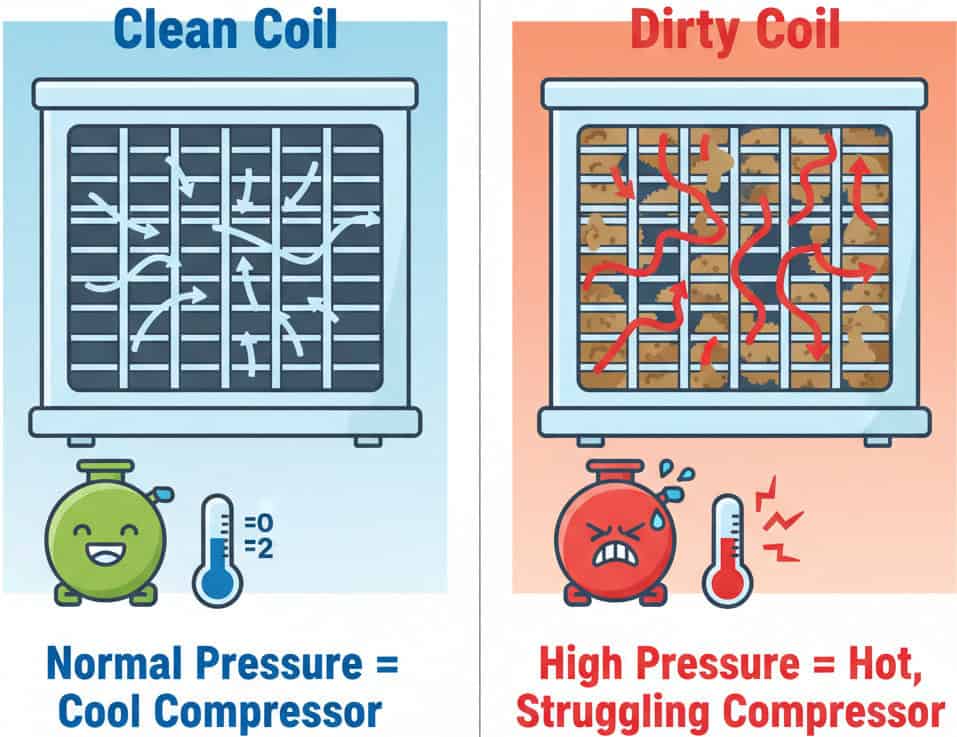
At the heart of it is that big metal box outside – the condenser. Its job is to take heat from inside your home and dump it outside. When those thin metal fins are clean, air can pass through easily and your system can get rid of heat quickly. When they’re packed with dust, grass, pollen, and neighborhood grit, the system can’t reject heat efficiently anymore, so the refrigerant pressure inside has to climb higher and higher just to push the same heat out of your home. You pay for that with longer run times, higher energy bills, and unnecessary wear on the compressor.
On top of that, the indoor coil is pulling water out of the air every minute the system runs, and all of that moisture has to get out through a narrow plastic condensate drain line. Over time, that line becomes a perfect home for algae, slime, and fine dust. Left alone, it eventually clogs, backs water up into the pan, and either spills onto your floor or trips a safety switch that shuts the system off – usually on the hottest day of the year. A real tune‑up includes clearing and verifying that drain line so you’re not one summer afternoon away from a mess.
Energy Smart: Help Paying for a Real AC Tune‑Up in New Orleans
Residential electric customers are typically eligible for a tune‑up every two years, with an instant rebate of up to a set dollar amount per system (and a higher amount for qualifying income‑eligible households), as long as the unit is at least one year old and the work is done by a participating Energy Smart contractor.
You’re already paying into the Energy Smart program through a small EECR line on your Entergy New Orleans bill – this tune‑up is simply a way to bring some of that money back into your home in the form of real maintenance. If you’d like to see how that charge works and what other incentives are available, check out our Utility Programs page and our Energy Smart by Entergy New Orleans article.
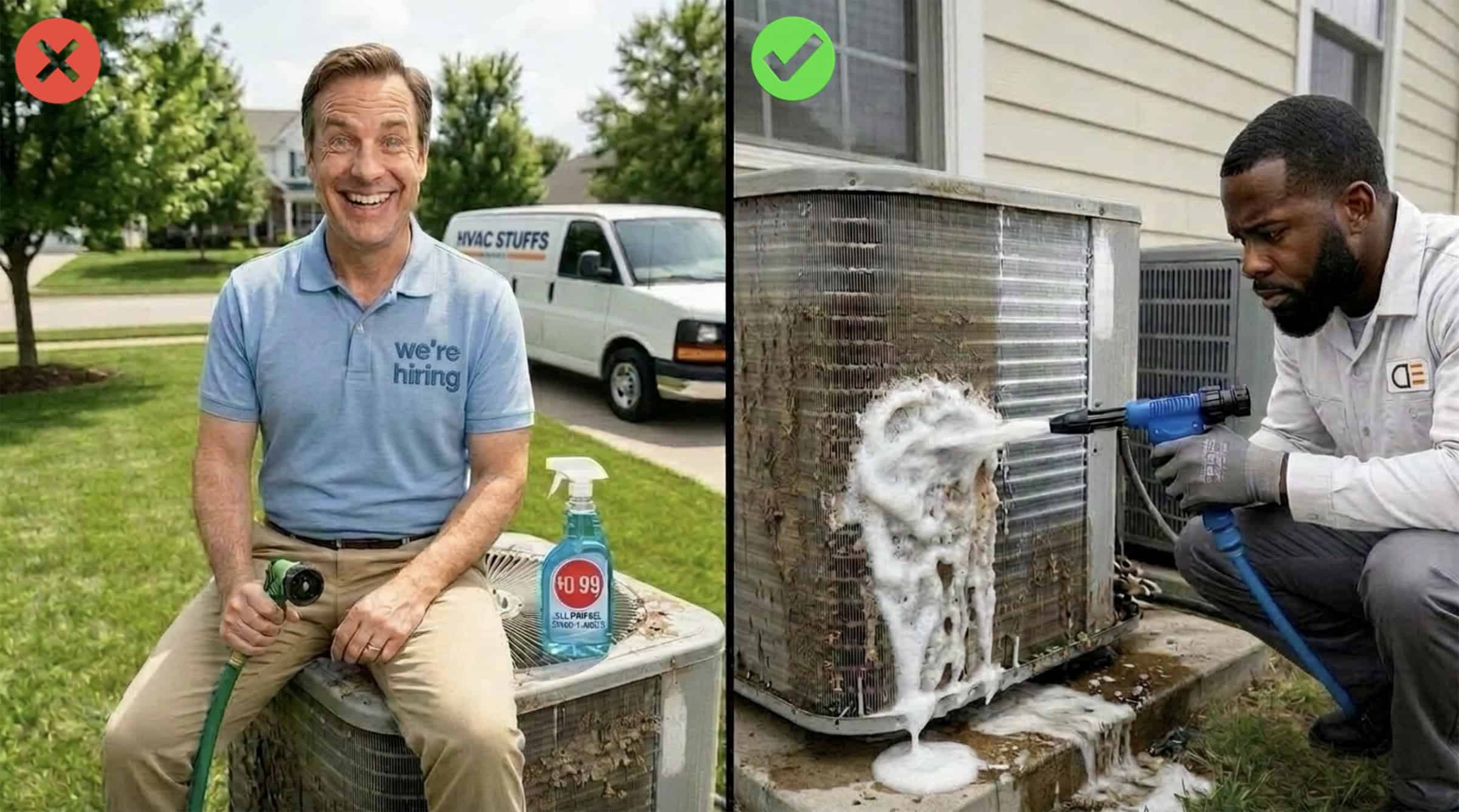
When we clean that outdoor coil, we’re not just hosing it off and calling it good. Different systems use different coil designs and metals, and some of the harsh acid or bleach‑type cleaners sold for coils can actually eat away at modern aluminum and microchannel coils over time. Our tune‑up starts by looking at the specific coil your system has, then matching the cleaning method to that coil: plain water where that’s all that’s needed, and professional, non‑chlorine, aluminum‑safe coil cleaners when we need more cleaning power. The goal is simple: use enough cleaning muscle to restore efficiency and lower system pressure, without using chemicals that quietly shorten the life of your equipment.
How New Orleans AC Tune‑Ups Tie into Duct Sealing
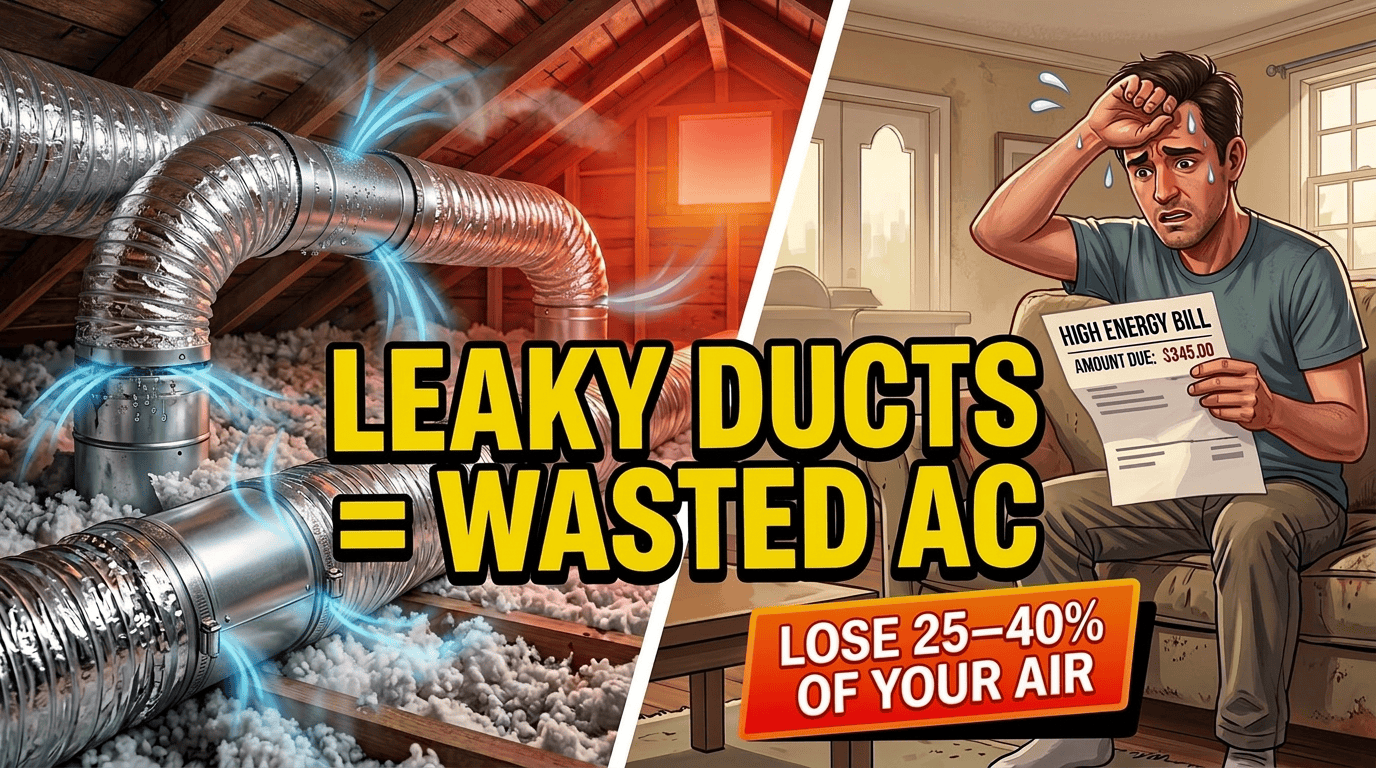
So far we’ve talked about the equipment itself – the “heart” of the system. But there’s a second, invisible problem in a lot of New Orleans homes that can undo a lot of that good work: leaky ductwork hiding in a 130–150°F attic or under a raised home.
When supply ducts leak into the attic or crawlspace, you’re not just losing some cooled air. The air handler still pulls a full volume of air from the house, but a chunk of the supply air never makes it back to your rooms. Your home goes into a weak vacuum and replaces that missing air with hot, humid outside air pulled through every crack, recessed light, and gap. That’s why some homes feel clammy and have rooms that never quite cool off, even when the equipment itself is in decent shape.
Professional duct sealing attacks the root cause. We test the duct system to see how much air is being lost and where, seal key joints, boots, and connections with durable mastic and other materials, then re‑test so there’s a clear before‑and‑after number instead of “trust us.” Once those leaks are sealed, house pressure moves back toward neutral, so you’re not constantly dragging in hot, wet outside air every time the system runs.
Why We Combine Duct Sealing with Our New Orleans ACTU Service
This is why we don’t treat duct sealing as an optional add‑on in New Orleans.
The ACTU focuses on the equipment: lowering high refrigerant pressures with proper condenser coil cleaning, clearing the drain line, and verifying the system is running within normal ranges.
Duct sealing fixes the delivery system: stopping cooled air from dumping into the attic or crawlspace and reducing the “vacuum effect” that pulls in hot, humid Gulf‑Coast air.
If you only tune the unit but leave leaky ducts, you’re still throwing away cooled air and pulling in more hot, wet air to replace it. If you only seal ducts but never fix a dirty, high‑pressure condenser coil or a risky drain line, the “heart” keeps overworking and you’re still one clog away from a surprise shutdown.
Energy Smart recognizes this too, which is why there are incentives for both A/C tune‑ups and duct sealing upgrades. Bundling them into one visit makes it possible for us to do thorough work on both the ducts and the equipment, use the funding you’re already contributing to on your Entergy bill, and still keep your out‑of‑pocket cost reasonable.
Want the Deep Dive on New Orleans Duct Leakage?
In this blog, we’ve focused mainly on the tune‑up side – what a real ACTU looks like and why it matters – then demonstrated how duct sealing supercharges those results in New Orleans’ hot‑humid climate. Duct leakage and sealing are big topics on their own: how leaky ducts turn your house into a vacuum, why homes in our climate sometimes pay for the same cooling three times, and what a proper duct sealing job involves.
We cover all of that in detail in our dedicated duct leakage and sealing article. If you’d like to dig deeper into the building‑science side and see the numbers behind the story, take a few minutes to read that full blog:
How Leaky Attic Ducts Turn Your Home into a Vacuum
When you put it all together- a real coil cleaning that lowers high refrigerant pressures, a cleared condensate drain line, a checklist‑driven A/C tune‑up, and ducts that actually deliver air to the rooms instead of the attic or crawlspace, you get three things that matter in a New Orleans home:
Comfort that feels like what you paid for.
Fewer breakdowns and surprises.
Lower, more predictable summer power bills.
If you’re in New Orleans and your home fits the Energy Smart guidelines, we can often bundle a proper ACTU and duct sealing into a single visit, tap the incentives you’ve already been funding on your bill, and show you before‑and‑after numbers so you know what changed. When you’re ready, reach out and ask for an AC tune‑up plus duct sealing under the Energy Smart program, and we’ll walk you through what it looks like for your home.
FAQ: New Orleans AC Tune‑Ups, Duct Sealing, and Energy Smart
Our ACTU focuses on lowering system pressure and preventing breakdowns, not just “spraying off” the unit. We use coil cleaners made for modern condensers – non‑chlorine, aluminum‑safe products chosen to clean effectively and protect today’s aluminum and microchannel coils, clear and verify the condensate drain line, and follow a full checklist so the system runs the way the manufacturer intended instead of just blowing cold air for now.
The tune‑up fixes the equipment; duct sealing fixes the air delivery system. If ducts leak into the attic or crawlspace, you lose a chunk of cooled air and pull hot, humid outside air into the house. Sealing the ducts lets the benefits of a real tune‑up actually reach your rooms and reduces wasted energy.
Energy Smart incentives are available for qualifying tune‑ups and for duct sealing as separate measures. In practice, we almost always bundle them on one visit because that’s what delivers the best comfort, humidity control, and bill savings, and it makes the trip economically viable while still using the incentives you’re already funding on your Entergy bill.
Under current program rules, most New Orleans residential customers are eligible for a tune‑up about every two years and for a limited number of ACTUs per account. That’s why it’s important to use those visits on a thorough, checklist‑driven ACTU instead of a quick cosmetic cleaning.
While every home is different, cleaning dirty coils, clearing the drain line, and sealing leaky ducts all reduce wasted energy and runtime. Many homes see lower peak‑summer bills, fewer no‑cool calls, and better comfort once the system can move and condition air the way it was designed to.
Common red flags include hot or cold rooms, long AC run times, dusty supply vents, musty smells when the system runs, or visible gaps around ceiling registers. If you’re seeing a few of these, pairing duct sealing with your next ACTU is usually a smarter first investment than replacing equipment.
We complete the required testing, tune‑up checklist, and duct sealing work, document everything the way the program requires, and submit the paperwork so incentives are applied correctly. You get one combined visit, a clearer picture of what changed, and less hassle with forms and approvals.
References
Cooling energy use in hot, humid climates and duct leakage impacts
Benefits of inspecting and cleaning evaporator and condenser coils annually
Aluminum Coil Cleaning Best Practices
Product documentation (coil cleaners and aluminum coils)
Goodman / Amana Aluminum Coil Cleaning Recommendations (Service Bulletin SA‑026, PDF).
Nu‑Calgon Evap‑Green evaporator coil cleaner – aluminum and microchannel‑product description
DiversiTech Triple‑D Universal Coil Cleaner – metal‑safe, aluminum/microchannel‑safe technical data sheet
Ameri‑Kleen 1902 HVAC Aluminum Condenser Coil Cleaner – pH‑neutral, aluminum‑safe product information