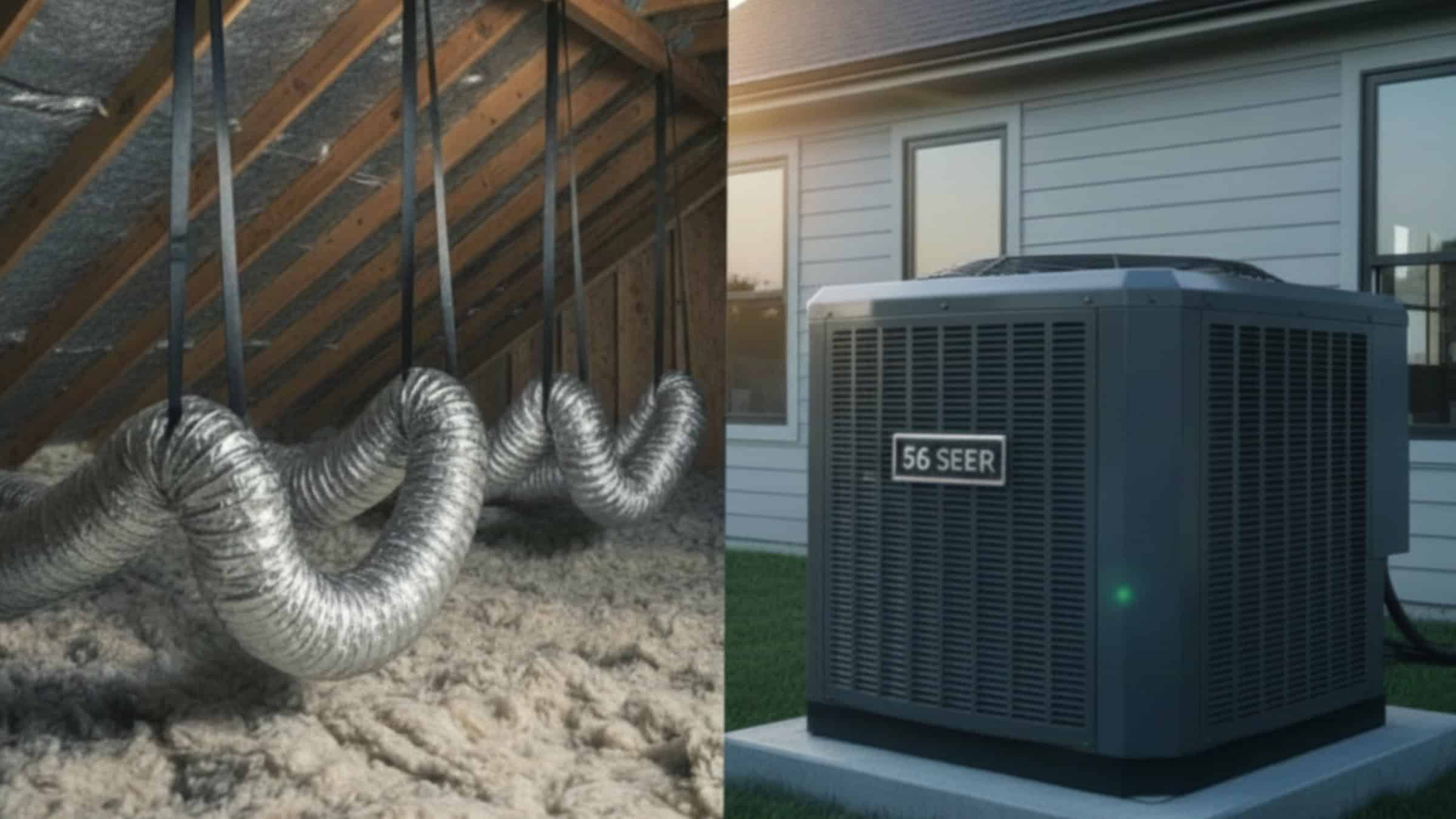
Most homeowners obsess over SEER ratings and brand names when shopping for air conditioning. Yet few experienced contractors know a brutal truth: even the most efficient air conditioner is running at a fraction of its advertised and rated performance if installed with substandard ductwork. However, even fewer will announce this truth. Afterall, why encourage scrutiny and make one’s job performance more difficult than it needs to be? In Louisiana’s brutal climate—where attics hit 130°F and humidity pushes dewpoints above 77°F—poor ductwork doesn’t just waste money. It systematically destroys HVAC equipment, fosters mold growth, and creates indoor comfort that remains perpetually out of reach despite high utility bills.
The numbers are sobering.
What Poor Ductwork Really Costs
According to the U.S. Department of Energy and ENERGY STAR, the typical residential forced‑air system loses 20–30% of conditioned air through duct leaks, loose connections, and installation defects. For a homeowner spending 2,400 dollars annually on cooling, that’s 480–720 dollars wasted every single year.
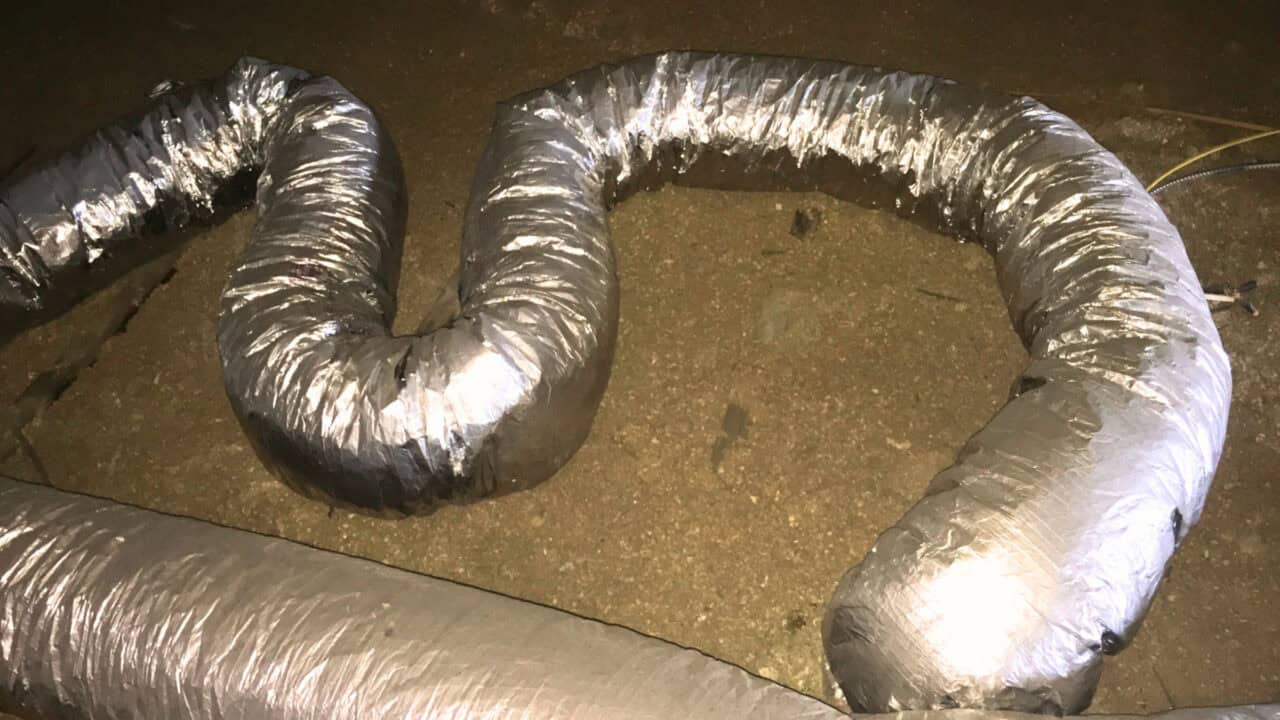
The ‘spaghetti’ flex duct that’s far too long, adding friction and killing airflow
Here’s where it gets really expensive: proper ductwork can add 3–5 years to HVAC equipment life. Homeowners who skip ductwork corrections may face a 6,000–8,000 dollar premature compressor replacement that could have been prevented with 3,000–4,000 dollars of ductwork upgrades.
Sources for this section:
ENERGY STAR / DOE – duct leakage and 20–30% energy loss
NIST – HVAC performance losses from improper installation
The Four “Silent Killers” in Flex Duct Installation
1. Compression and Bunched Core
Flex duct arrives compressed in boxes. Many installers simply connect both ends without stretching the inner core tight, leaving an accordion‑like, bunched core that creates catastrophic airflow resistance.
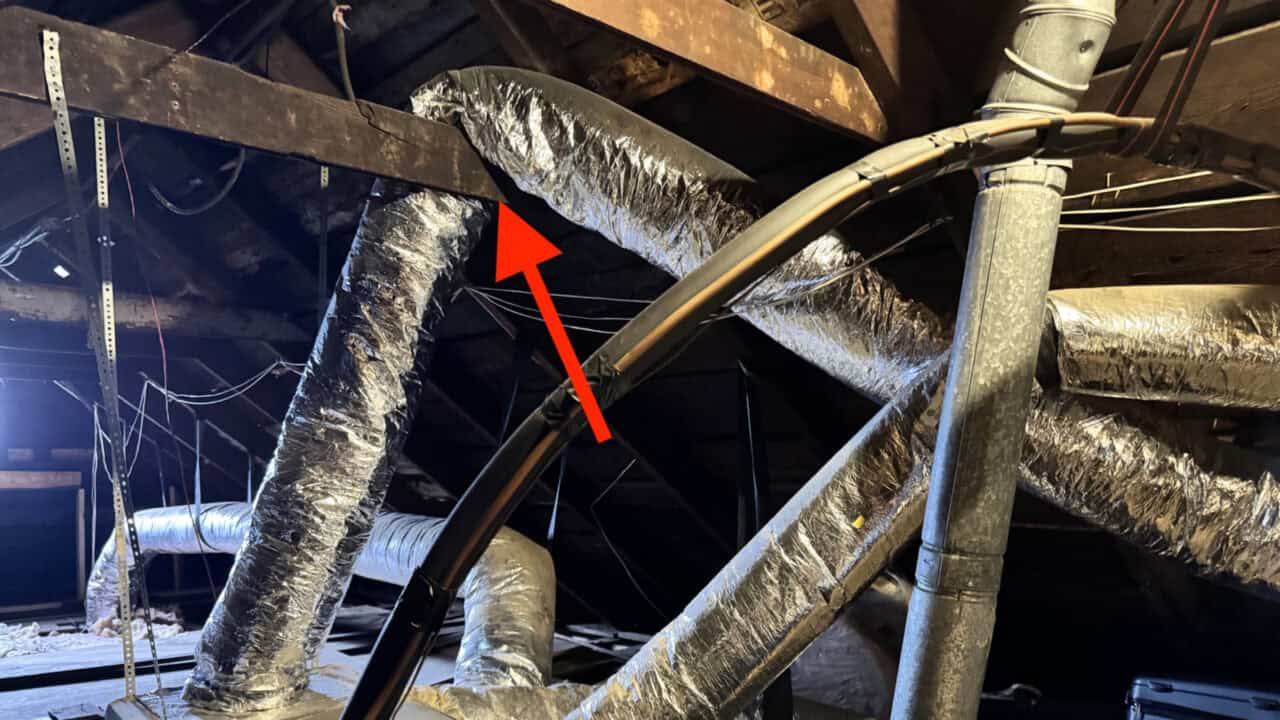
Crushed sweating flex duct draped over collar tie, turning this run into a major bottleneck, causing massive static pressure.
Lawrence Berkeley National Laboratory found that 30% compression can increase pressure drop by 10 times compared to properly stretched duct. Even moderate 15% compression can create 4–8 times more pressure loss. In the field, National Comfort Institute technicians routinely remove up to three extra feet of bunched core that would otherwise remain hidden. Once the core is removed and the duct is fully stretched, they often measure 30–40% airflow improvements. For example, a 6‑inch duct that originally delivered 100 CFM now delivers 130–140 CFM.
Sources for this section:
Lawrence Berkeley National Laboratory – compression effects on pressure loss in flexible HVAC ducts
National Comfort Institute – Flex Ducts: Four Steps to Better HVAC Installations
2. Sharp Turns and Kinked Connections
Sharp 90‑degree bends can kink flex duct internally, creating severe airflow restrictions where ducts connect to boots, takeoffs, or navigate framing and trusses. Those kinks increase static pressure throughout the system.
High static pressure forces blower motors to work 50% or more harder. Motors designed to last 15–20 years may fail within 2–5 years under that extra strain, turning into a 600–1,200 dollar replacement that never should have been necessary.
The fix: route ducts with long, sweeping turns instead of tight angles, and use sheet‑metal elbows at unavoidable junctions to maintain smooth airflow.
Sources for this section:
No kinks or sharp bends in flex‑duct installation
Static pressure and blower/equipment stress
3. Inadequate Support and Sagging
Field surveys routinely find ductwork supported every 5–6 feet, even though standards call for support every 3 feet. Sagging ducts create low spots where airflow slows and stagnates, condensation collects instead of evaporating, and rooms on those runs never reach setpoint temperature.
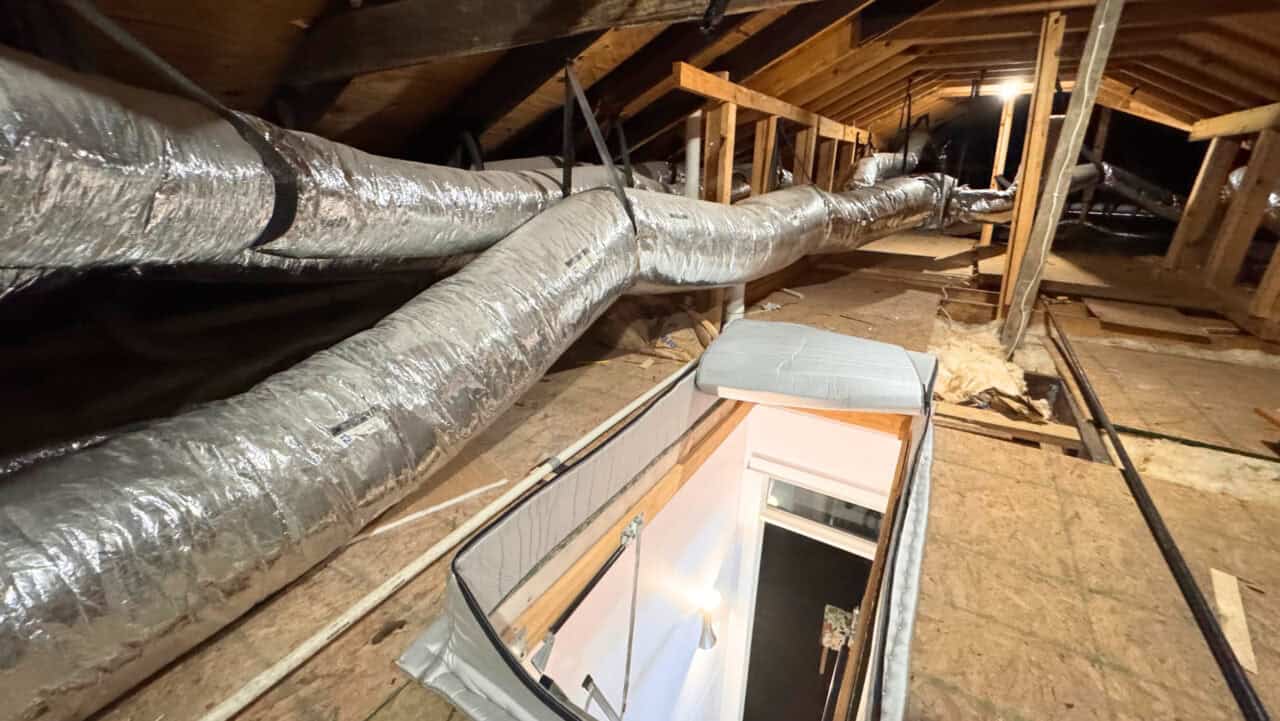
Thirty-two-foot flexible HVAC ductwork run with only three tight straps restricting airflow and causing condensation
In Louisiana’s hot, humid attics, sagging flex ducts become ideal condensation traps. Moisture accumulates, saturates insulation, and allows mold growth inside ducts, which can then get blown into living spaces. Thin plumbing strap or wire makes things worse because it constricts the duct at each support point and can even cut into the duct over time, causing leaks directly into the attic.
The fix: support ducts every 3 feet with at least 3‑inch‑wide straps or metal bands to prevent sagging and condensation problems.
Sources for this section:
Support spacing and sag limits for flex duct
How sagging flex ducts reduce airflow and create comfort problems
4. Undersizing Flex Duct
Many contractors still size flex duct using a 0.10 friction rate developed for smooth sheet metal and assume a 6‑inch duct will always deliver 100 CFM. That approach fails with flex duct.
Flex’s corrugated interior creates turbulence that sheet metal does not, so when it is sized the same as metal, flex duct delivers significantly less airflow at much higher static pressure. Undersized ductwork becomes a permanent chokepoint; even perfectly stretched and supported flex duct will not move enough air if the diameter is too small.
The fix: size flex duct using a 0.05 friction rate or perform a full Manual D calculation that accounts for flex duct’s higher resistance.
Sources for this section:
ACCA Manual D – flex duct sizing and friction‑rate guidance
ADC / manufacturer flex‑duct installation instructions on sizing and higher resistance
How Bad Ductwork Shows Up in Your Home
Comfort Problems: Hot Rooms, Cold Rooms, Sticky Air
Restricted airflow from compressed, kinked, or undersized ducts means some rooms get plenty of conditioned air while others starve. Rooms near the air handler overcool, while distant rooms never quite catch up. The thermostat only “sees” one location, so the rest of the house can remain uncomfortable.
In Louisiana, the humidity side is even worse. Proper airflow is critical for dehumidification. When airflow drops, the AC cannot remove enough moisture, even if the thermostat reads 73°F. Homeowners feel that “sticky” air, see more condensation on surfaces, and create a perfect environment for mold, dust mites, and allergens.
Many also notice whistling vents—acoustic evidence that the system is fighting against itself.
Source for this section:
How poor airflow and duct problems lead to high humidity, “sticky” air, and allergy issues
Equipment Damage: The 8,000 Dollar Replacement That Shouldn’t Happen
Poor ductwork quietly destroys HVAC equipment years before the end of its design life:
Blower motor failure: high static pressure makes the motor work much harder, so motors meant to last 15–20 years may fail in 2–5 years, often costing 600–1,200 dollars to replace.
Evaporator coil freezing: low airflow can drop coil temperatures below freezing, leading to ice buildup, blocked airflow, and repeated freeze‑thaw cycles that damage fins and force 1,500–3,000 dollar coil replacements.
Heat exchanger cracking: low airflow in heating mode overheats the furnace heat exchanger, causing metal fatigue and cracks that often cost 3,000–6,000 dollars to fix.
Compressor failure: restricted airflow changes system pressures, forcing the compressor to run longer and harder. Because compressor replacement often costs 60–70% of a full system, many homeowners end up replacing the entire 8,000–15,000 dollar system years early.
Sources for this section:
Static pressure and shortened equipment life (blower, coil, compressor, heat exchanger)
Typical repair/replacement cost ranges for major HVAC components
Energy Waste: The 700 Dollar Annual Surcharge
Three issues pile on top of each other:
Direct leakage: 20–30% of conditioned air can leak into unconditioned spaces such as hot attics. A 3‑ton system moving 1,200 CFM with 25% leakage effectively wastes three‑quarters of a ton of cooling capacity.
Increased runtime: when ducts leak or restrict airflow, systems run much longer to reach setpoint. Instead of cycling 15–18 minutes per hour, they may run 35–40 minutes, nearly doubling energy use.
Equipment inefficiency: HVAC equipment only achieves its rated efficiency at the right airflow, typically 350–400 CFM per ton. Duct restrictions drop airflow and degrade performance. NIST found that improper installation can increase energy use by about 30%.
ENERGY STAR estimates that leaky ducts can cut HVAC efficiency by about 20% and cost homeowners 300–700 dollars per year. Professional duct sealing usually delivers 15–30% energy savings and often pays for itself in 2–4 years.
Sources for this section:
NIST / DOE – improper HVAC installation can increase energy use by about 30%
Health and Structural Risks: Mold, Allergens, Moisture Damage
In Louisiana’s climate, condensation and mold are not theoretical concerns. When cold supply ducts run through hot, humid attics, condensation forms on duct exteriors—especially where insulation is compressed. Attic dewpoints in summer can exceed 77°F, and with 55°F air inside the ducts, any surface below dewpoint collects moisture.
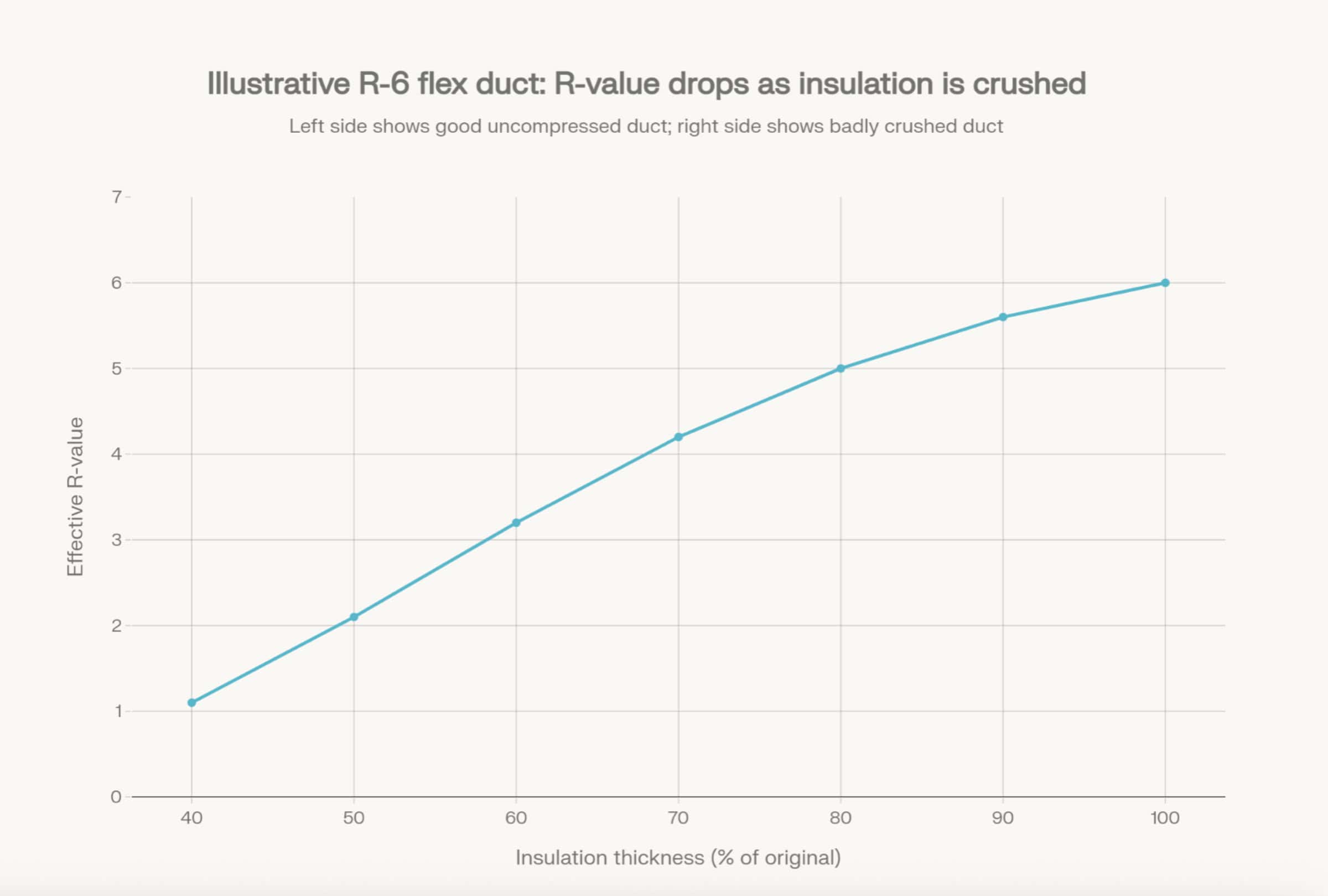
From the left, a badly crushed duct is hanging on to only about R-1, 40% of its original R‑value. As you move right, the line climbs back up toward a full‑thickness R‑6 duct.
Compressed insulation loses R‑value, which promotes more condensation. Sagging ducts create low spots where water pools instead of evaporating. Once insulation is saturated, it dries very slowly. Prolonged wetness allows mold to grow on duct jackets, attic insulation, and structural wood, and mold spores can spread through the HVAC system into the living space.
Return‑side duct leaks pull unfiltered attic and crawlspace air—dust, insulation fibers, pollen, mold spores, and even rodent droppings—straight into the system. That air bypasses the filter and circulates through the home, leading to persistent dust, musty odors, and worsening allergies or asthma.
Over time, dripping condensation can soak attic insulation and ceiling drywall. Long‑term moisture causes hidden mold, wood rot in trusses and rafters, and eventually visible ceiling stains. At that point, remediation can require structural repairs, insulation replacement, and mold cleanup that easily reaches 10,000–25,000 dollars.
Sources for this section:
Condensation on attic ducts, mold growth, and contaminated return‑air leaks
Typical costs and scope of major mold remediation and structural repairs
Why Louisiana’s Climate Makes Bad Ductwork Even Worse
Three local realities make ductwork performance critical for Gulf Coast homes:
Extreme attic temperatures: Louisiana attics often reach 130°F or higher in summer. The huge temperature difference between that attic air and 55°F supply air drives heat gain and raises condensation risk, even on well‑insulated ducts. Poorly insulated or compressed‑insulation ducts can see supply air warm 15–20°F before it ever reaches your registers.
Sustained humidity: outdoor dewpoints routinely sit above 75°F, and attic dewpoints can reach 77–80°F. Unlike drier climates, where ducts dry out between cycles, Louisiana’s humidity keeps ductwork wet for weeks at a time, promoting persistent mold growth and insulation saturation.
Extended cooling season: air conditioning typically runs 8–10 months per year in Louisiana instead of 4–6 months in milder regions. A 20% efficiency loss that costs 200 dollars per year in a northern state can cost 400–500 dollars per year here simply due to longer runtime.
In short, poor ductwork in Louisiana creates perfect conditions for premature HVAC failure, structural damage, and indoor air quality problems.
Sources for this section:
Louisiana attic temperatures and extreme cooling loads
Louisiana humidity, dewpoints, and extended cooling season
The Bottom Line (and What to Do Next)
Premium high‑efficiency HVAC equipment will only deliver mediocre results when it is paired with bad ductwork, while a properly installed mid‑efficiency system with excellent ductwork often outperforms it in comfort, energy use, equipment life, and indoor air quality.
For Louisiana homeowners, ductwork can be the difference between 15 years of reliable, efficient comfort and 8 years of high bills, comfort complaints, and premature replacement. A homeowner who spends 12,000 dollars on new equipment but ignores 4,000 dollars of needed ductwork correction can easily lose 15,000–20,000 dollars over the system’s shortened lifespan in wasted energy and early replacement.
By contrast, professional duct correction typically runs 2,000–4,000 dollars, delivers 300–700 dollars per year in energy savings, and can extend equipment life by 3–5 years. It usually pays for itself within 3–5 years—and then keeps paying you back in comfort and reliability.
The real question is not whether you can afford to address ductwork problems. Given the energy waste, equipment damage, and health risks, the question is whether you can afford not to.